A preschool routine at home is not a school timetable. It is a small number of repeated anchors that tell a child what comes next. The repetition is what makes the day feel safe, and the flexibility is what makes it survive a real week.
The mistake is planning a full day of activities and then abandoning the plan on Tuesday. A better approach is to plan the order, not every minute. This guide shows a simple daily rhythm, a weekly planning method, and what to do when the day goes wrong.
Routine, not schedule
A schedule says 8:15 is tracing and 8:35 is reading. A routine says the morning starts with breakfast, then a short learning block, then play. The order stays the same; the clock can move.
For ages 3 to 5, the order is more useful than the time. Children learn that after breakfast we do a page, after the page we play, after play we go outside. That predictability reduces negotiations and makes the day easier for the adult too.
Three anchors for the day
Anchor 1: A predictable start. Wake up, breakfast, get dressed, and one small signal that the day has begun. The signal can be a song, opening the curtains, or putting the activity box on the table. Keep it the same.
Anchor 2: One short learning block. Fifteen to twenty minutes of focused activity: a letter page, a counting game, a book with questions, or a short craft. Sit together if the child wants to. Stop while it is still going well.
Anchor 3: A calm afternoon or bedtime routine. A snack, outdoor time or free play, then the same wind-down sequence. The evening routine matters as much as the learning block because it ends the day predictably.
Everything else, meals, play, errands and rest, fits around these three anchors.
A sample day that can move
This is an example, not a rule. Shift the times to fit your family.
| Time | What happens | Notes |
|---|---|---|
| 7:30 | Wake up, breakfast, get dressed | Same order every day |
| 9:00 | Learning block, 15 to 20 minutes | One page or one game, then stop |
| 9:30 | Free play and tidy up | Child chooses the play |
| 10:30 | Outside or movement | Walk, garden, dancing, playground |
| 12:00 | Lunch and quiet time | Books, audio story or nap |
| 15:00 | Optional second block, 10 minutes | Reading, puzzle or a short game |
| 17:30 | Dinner and family time | No lesson |
| 19:00 | Bath, book, bed | Same sequence every night |
If the morning collapses, the learning block can move to the afternoon. If the afternoon is full, skip the second block. The anchors are the priority, not the timetable.
Plan the week, not the day
A weekly plan is easier to keep than a daily plan because it gives you room to move things.
- Choose one letter or theme. One letter, one season, one animal, one topic. A theme gives the week a shape without adding work.
- Pick two activities per day. One paper activity and one hands-on activity. For example, a tracing page and a sorting game with buttons.
- Print only what you need. Three to five pages for the week is enough. Printing a whole workbook in advance usually means half of it stays blank.
- Gather the supplies in one box. Crayons, scissors, glue, play dough, a few small objects. Put the box where the learning block happens.
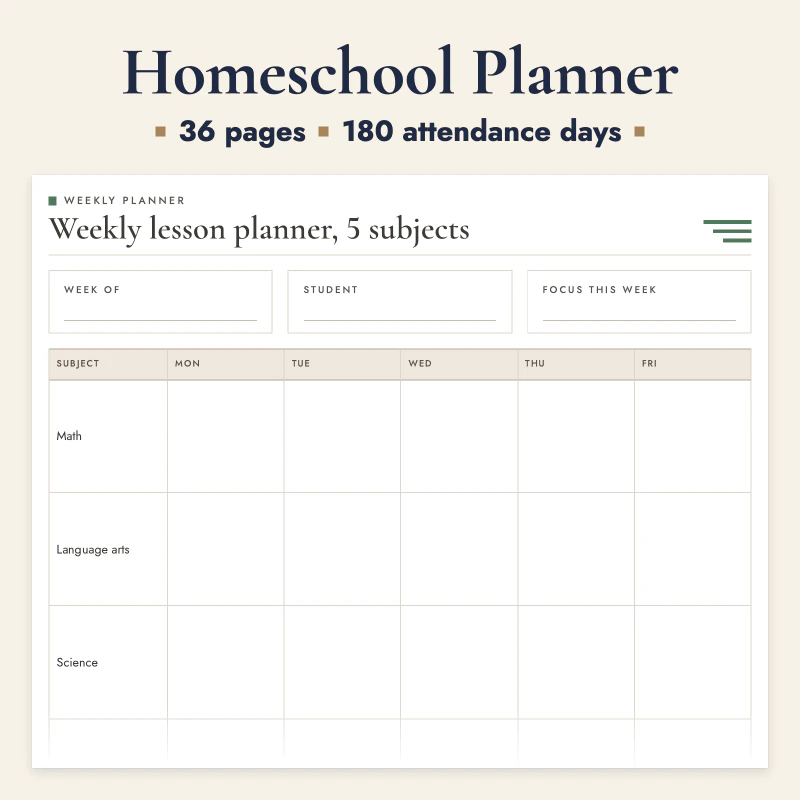
- Write the week on one page. Five rows, two activities each, one outing, one free day. Keep the page on the fridge or in the planner.
A week with one letter, ten short activities and one outing is a full preschool week. It does not need to be more.
A 20 minute planning routine
Do this once a week, ideally on Sunday or Friday afternoon:
- Choose the letter or theme for the week.
- Look at what you already have: books, toys, printables, kitchen objects.
- Pick five paper activities and five hands-on activities.
- Print the pages and put them in order.
- Put the supplies in the box.
- Write one thing you want to notice during the week, such as "uses scissors" or "counts to five".
The last step matters. A small observation gives the week a purpose without turning it into a test.
When the day goes wrong
Some days will not follow the plan. A missed nap, an appointment, a difficult morning, or a child who simply wants to play. Keep these rules:
- Shorten, do not cancel. Five minutes of a page is still the learning block.
- Move, do not catch up. Move the activity to the afternoon or the next day. Do not add yesterday's work to today.
- Skip without guilt. A week with three good days is a good week.
- Return to the anchor. After a disruption, go back to the same start signal. The routine is the point of return.
If a particular activity causes a struggle every time, change the activity, not the child. A different page, a different time, or a hands-on version often solves it.
Adjust for ages 3 to 5
Three year olds: five to ten minutes of focused activity, lots of movement, repetition of the same song or page. They may watch more than they do.
Four year olds: ten to fifteen minutes, simple instructions, one step at a time. They can help choose the activity.
Five year olds: fifteen to twenty minutes, early letters and numbers, and more independence with scissors and glue. They can plan part of the week with you.
These are starting points, not milestones. Children vary widely, and a child who is not interested today may be ready next month.
Screens and quiet time
A routine can include a short screen time if it works for your family. Keep it at the same point in the day, choose the content in advance, and end it with a clear signal. The same predictability that helps the rest of the day helps screen time too.
Quiet time without a screen is also useful: books, audio stories, drawing, or a small basket of toys. The goal is a calm block, not a perfect one.
Frequently asked questions
How many hours a day should you do preschool at home?
For ages 3 to 5, one short learning block of 15 to 20 minutes is enough, plus conversation, play and daily routines. A second short block in the afternoon is optional. The day does not need to look like a school day.
What should a preschool daily routine include?
Three anchors work well: a predictable morning start, one short learning block, and a calm afternoon or bedtime routine. Add meals, outdoor time and free play. The order matters more than the exact clock time.
How do you plan a preschool week at home?
Choose one letter or theme for the week, pick two short activities for each day, print only the pages you need, and gather the supplies in one box. Write the plan on one page and keep it visible.
What if my child will not sit still?
Shorten the learning block and add movement. Five minutes of tracing followed by play is still a lesson. Many children listen while moving, so let them stand, walk or hold something while you talk.
Do you need a curriculum to start a preschool routine?
No. A routine with books, conversation, play and a few printable pages is enough to start. A curriculum helps when you want the planning, the order of letters and the pages in one place.
A ready-made option
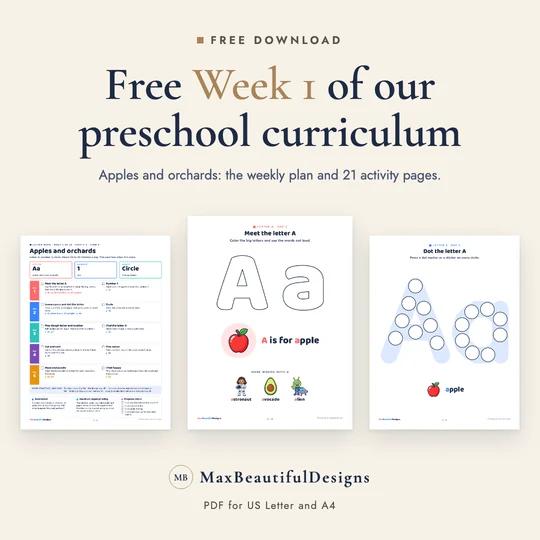
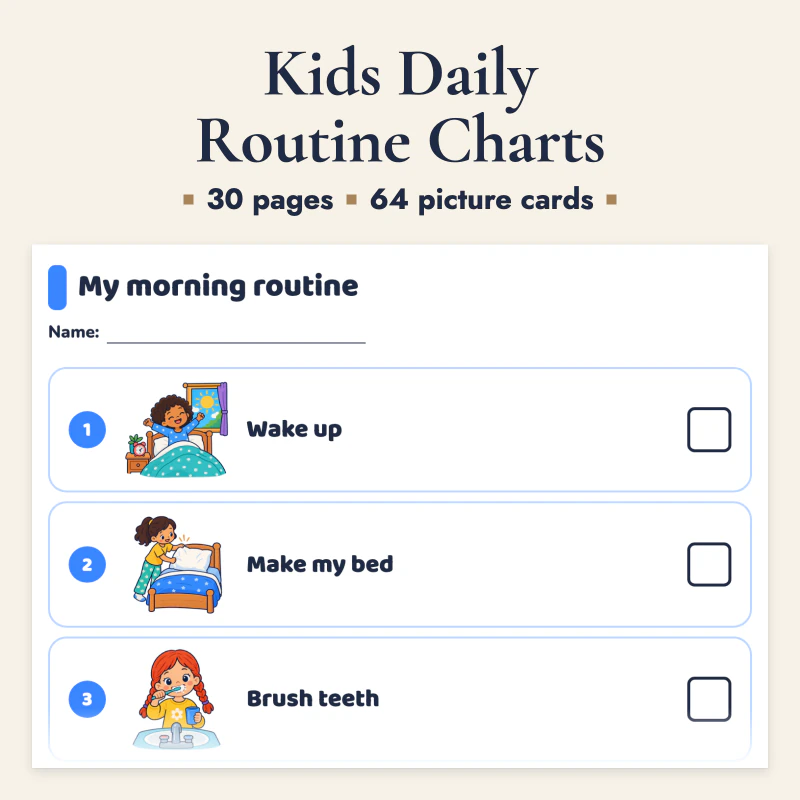
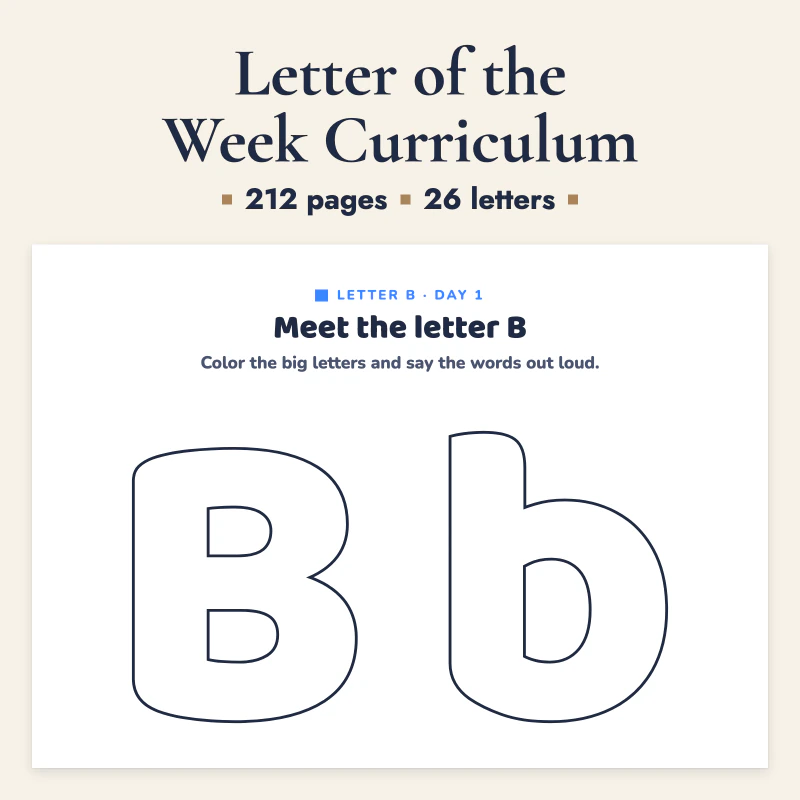
If you want the weekly plan and the pages in one place, our 36 Week Preschool and Kindergarten Curriculum has 36 weeks, two short activities a day and 915 pages for ages 3 to 6, in US Letter and A4. The Homeschool Planner keeps the year, attendance and progress on paper, and the Kids Daily Routine Charts give younger children a picture version of the day. You can also try Week 1 free before you plan a whole year.