A letter from Santa works because it is personal. Children do not remember a long list of praise. They remember that the letter knew about the loose tooth, the swimming badge, the argument with a sibling that ended in a hug, or the fact that they kept trying with a difficult book.
You do not need to be a writer. You need one real detail and a warm tone. This guide gives you a simple structure, three short examples and a few practical notes on paper, handwriting and timing.
Use a simple structure
A letter that reads well usually has five parts:
- A greeting with the name. "Dear Mia" is enough. The name should be the first thing the child sees.
- One specific observation. Something Santa noticed this year: a kind act, an effort, a new skill, a change. One sentence, not a list.
- One encouragement. A sentence about why that matters, or what Santa hopes the child keeps doing.
- One small wish for Christmas Day. Not a list of presents. A wish for the day itself, such as a calm morning, a game together, or a favourite meal.
- A sign-off and a small extra. "Merry Christmas, Santa" plus a short P.S. about the reindeer, the sleigh or the cookie.
That is half a page. For a younger child, cut it to three sentences.
What to include, and what to leave out
Include:
- The child's name, spelled correctly.
- One detail that is true and specific to this year.
- A mention of a kind act or an effort, not only an achievement.
- A warm, simple sign-off.
- Optional: a small drawing, a stamp, a wax seal, a P.S. about the North Pole.
Leave out:
- A list of every gift. It turns the letter into an order confirmation.
- Comparisons with siblings or friends.
- Threats about the Nice List. The letter should encourage, not bargain.
- Long words that a young child cannot follow.
- Claims about the child that are not true. Children notice.
Three short examples
For a four year old: ``` Dear Noah,
I saw how you helped your little sister put on her shoes this week, even when you wanted to go outside first. That was kind.
Tomorrow, I hope you have a happy morning with your family and a little time to play with your new things. The reindeer are looking forward to the carrots.
Merry Christmas, Santa
P.S. Dasher says thank you for the apple last year. ```
For a seven year old: ``` Dear Emma,
This year I noticed how hard you kept working on your reading, even on the days when the words did not want to stay still. That kind of trying is my favourite thing to see.
I hope Christmas Day is slow and happy for you, with time for a game and a walk. Keep being kind to the people around you.
Merry Christmas, Santa
P.S. The elves found your letter in the drawer. It was a good one. ```
For a ten year old: ``` Dear Jonas,
I heard about the goal you scored in the last match, but what I liked more was that you passed the ball to a teammate who had not scored all season. That is the part I remember.
I hope you get a good book and a lazy morning on Christmas Day. And I hope you keep making room for the people around you.
Merry Christmas, Santa
P.S. The sleigh is heavier this year. The reindeer have been training. ```
Change the details. The examples are only there to show the shape: specific, short, warm.
Handwriting and paper
A handwritten letter feels special, but it is not required. If you print, use a clean font and slightly heavier paper, then add the child's name and one sentence by hand. The mix of printed and handwritten looks intentional.
A few practical choices:
- Paper: cream or white, A4 or US Letter. A slightly thicker paper (120 to 160 gsm) feels better and does not curl.
- Ink: blue or black for the body, a coloured pen for the name.
- Extras: a stamp, a sticker, a wax seal or a small drawing in the corner. Keep it simple so the letter stays readable.
- Envelope: write the child's name in large letters. A plain envelope with a stamp looks more real than a decorated one.
If you want a fillable PDF, our Santa and Elf Magic Kit includes letters you can type into, plus certificates and notes. You can print one page and keep the rest for next year.
Certificates and small extras
A letter is stronger with one small companion piece:
- A Nice List certificate with the child's name and the year.
- A report card with a few kind, specific lines.
- A Christmas morning note left next to the tree.
- A thank you note for the cookies or the carrot.
- A map of the route, drawn by hand.
One extra is enough. Two or three can feel like a paper trail. The letter should stay the main object.
When and where to leave it
The letter usually appears on Christmas Eve, either in the Christmas Eve box, on the child's pillow, or next to the empty plate and the carrot. If you give a Christmas Eve box, the letter can be the first thing inside it.
Leave it where the child will find it without a search. A letter that is hidden too well becomes a cleanup problem. A letter on the pillow is found at bedtime, which is often the moment children are most receptive.
If you write the letter after the child has gone to bed, keep a pen and the filled-in details nearby. The best letters are written in five minutes, not thirty.
If your family does not do Santa
The same structure works for any winter letter. A letter from a grandparent, an aunt, a family friend or a parent can use the same five parts: a greeting, one specific observation, one encouragement, one wish for the day, a warm sign-off. The value is in the attention, not the signature.
You can also write the letter as a family tradition without presenting it as a letter from Santa. Children who know where it comes from can still enjoy the ritual.
Frequently asked questions
What should a letter from Santa say?
Keep it short and specific: a greeting with the child's name, one thing Santa noticed about them this year, one encouraging sentence, a small wish for Christmas Day, and a warm sign-off. Two or three short paragraphs are enough.
How long should a letter from Santa be?
One page is plenty, and half a page is often better for young children. The letter should feel personal, not like a form. A short letter that mentions one real detail is more convincing than a long letter full of general praise.
Should the letter from Santa mention gifts?
A small wish is fine, but avoid listing every present. The letter works best when it notices effort, kindness or a new skill, then mentions one simple thing for Christmas Day. That keeps the focus on the child, not the haul.
What age is a letter from Santa for?
It works for children from about three to ten. For younger children, use short sentences and a picture. For older children, add a little humour and a detail about something they achieved. Families decide themselves when the tradition ends.
Can I print a letter from Santa instead of handwriting it?
Yes. A printed letter with the child's name filled in looks clean and saves time. If you want a handmade feel, print it on slightly heavier paper and add the name and one sentence by hand.
A ready-made option
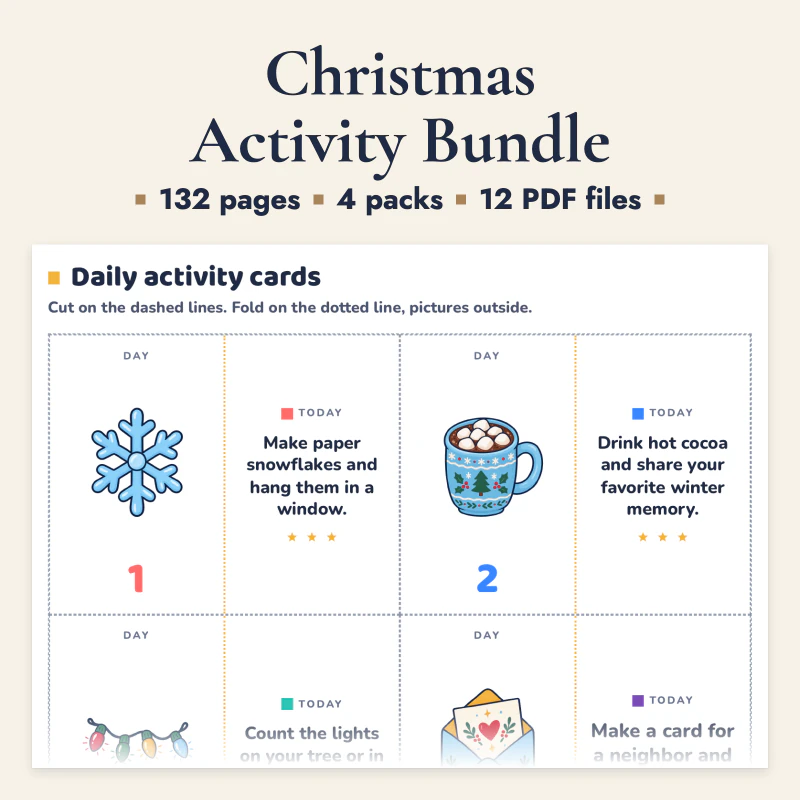
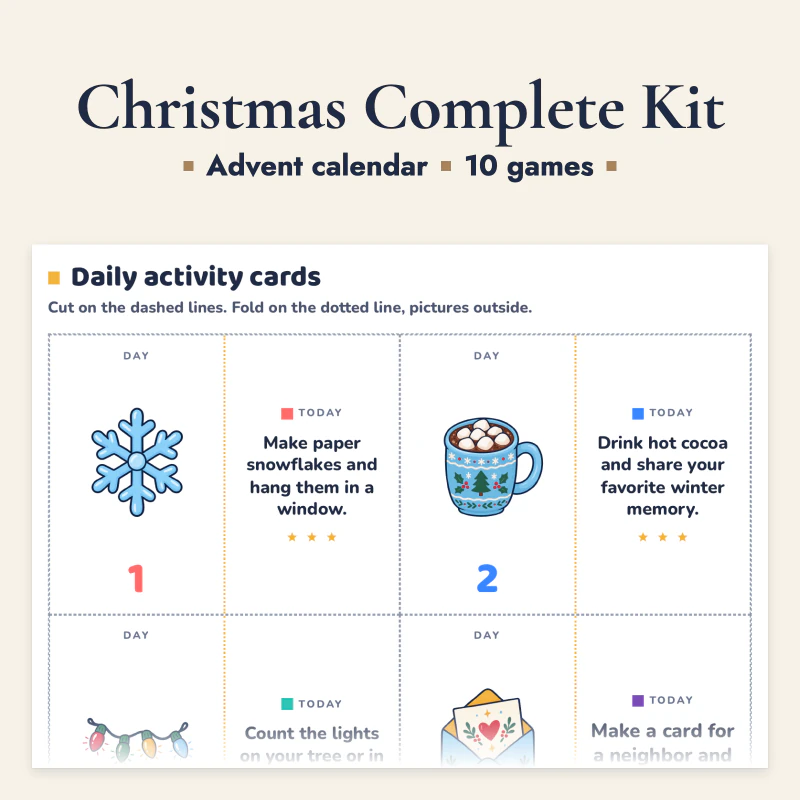
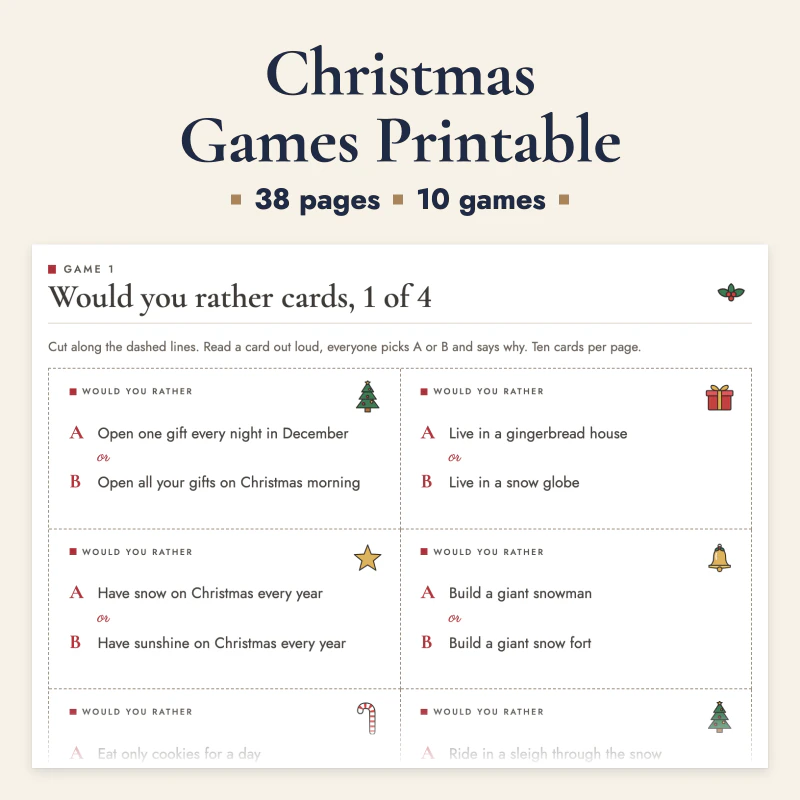
If you want the letter, the certificate and the small extras in one download, our Santa and Elf Magic Kit includes fillable letters, Nice List certificates, report cards and Christmas morning notes. It comes as PDF in US Letter and A4, so you can print only the pages you need. For the rest of the evening, the Christmas Activity Bundle adds games, coloring pages and advent cards.