An advent calendar is a plan for December. A printable one has an advantage over a shop-bought calendar with small toys: you decide what goes inside, you can change it for your child, and you can use it again next year.
The best version is not the most elaborate. It is the one you can prepare in half an hour and still enjoy on a busy weekday. This guide shows three formats, 24 activity ideas and a simple way to plan the month without buying 24 things.
Pick one of three formats
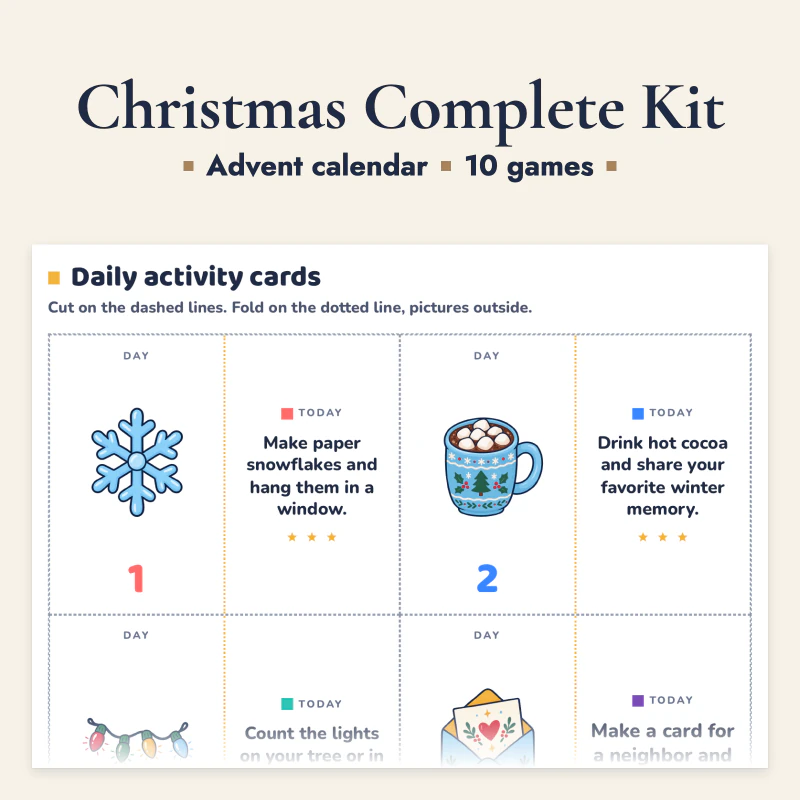
1. Activity cards. Print 24 cards, fold them, and put one in a small envelope or a numbered pocket each day. The child opens the card and finds a task, not a toy. This is the most flexible format and the easiest to store.
2. A countdown poster. Print one poster with 24 doors or circles. Each day, the child colors, stamps or sticks something on the number. This works well for small spaces and for children who like a visible countdown.
3. A paper chain or envelope garland. Print 24 strips or small envelopes, number them, and hang them on a string. Each day, one piece comes down. This looks festive and uses almost no table space.
All three formats can be combined. A poster on the wall plus a card each day is enough. You do not need a new activity for every day.
24 activity ideas that do not need new toys
Mix the categories so the month does not feel repetitive. A good rhythm is one active day, one making day, one giving day, one quiet day.
Make and do
- Color one Christmas page.
- Make a card for a neighbor.
- Bake simple biscuits or decorate bought ones.
- Build a blanket fort and read inside.
- Make a paper snowflake.
- Do a puzzle together.
- Write a letter to someone far away.
- Make hot chocolate with a small topping bar.
Give and share
- Choose one toy to donate.
- Help set the table without being asked.
- Call a grandparent or a friend.
- Leave a small treat for the mail carrier.
- Make a thank-you card for a teacher.
- Share a snack with a sibling.
- Pick a book to read to someone younger.
Read and watch
- Read a Christmas picture book.
- Watch a short Christmas film together.
- Listen to a Christmas story while drawing.
- Learn one Christmas song.
- Look at old family photos from past Christmases.
Quiet and slow
- Do one printable activity page.
- Have a candlelight dinner.
- Take a winter walk and collect something natural.
- Open the Christmas Eve box or read the letter from Santa.
You can swap any idea for something that fits your family. The list is a starting point, not a rule.
Plan the month in 30 minutes
Step 1: Print the set. Use US Letter or A4, whichever fits your printer. Print one test page first and check that nothing is cut off at the edge.
Step 2: Cut and sort. Cut the cards, then sort them into four piles by week. Put the busiest activities on days when you have more time. Put the quiet activities on school nights.
Step 3: Prepare the supplies. Look at the list and put the few things you need in one box: crayons, glue, a small treat, a card, a book. You do not need to buy anything else.
Step 4: Hang it where it is seen. A wall in the kitchen or the hallway works better than a shelf in another room. The calendar should be part of the morning routine, not a hidden surprise.
Step 5: Keep the leftovers. Put the unused cards and the poster in a folder at the end of December. Next year, you only need to print the pieces that were used up.
Printing tips for a clean result
- Paper: 120 to 160 gsm keeps cards stiff enough to stand up. Normal paper works if you use envelopes.
- Scale: print at 100 percent or "actual size", not "fit to page". This keeps the cut lines in the right place.
- Ink: the pages are designed to be readable in colour or grayscale. If you print in grayscale, the numbers and cut lines still work.
- Cutting: a guillotine or a craft knife gives straighter lines than scissors. Cut on the lines, not inside them, so the cards stay the same size.
- Storage: a small envelope or a zip bag keeps the cards together. Write the year on the bag if you want to remember.
Make it work for different ages
Toddlers (1 to 3): use a poster with large numbers and one simple action per day. Skip the small cards. Choose activities that take five minutes.
Preschool (3 to 5): activity cards with a picture and a short sentence. They can open the card themselves. Keep the scissors and small pieces for an adult.
Early school age (6 to 8): let them read the card and choose the order of two activities. Add a small challenge, such as writing one word or drawing the day.
Older children (9 to 12): give them a week to plan. They can write their own cards, choose the film, or organize the baking day. Ownership keeps the tradition alive.
Teenagers: keep the calendar but change the tone. A card with a film, a takeaway choice or a later bedtime works better than a craft. The ritual still matters.
Frequently asked questions
What is a printable advent calendar?
A printable advent calendar is a set of pages you print at home: a countdown poster, 24 activity cards, or small envelopes with a task for each day from 1 to 24 December. You cut it out once and use it again the next year.
What should go in a DIY advent calendar for kids?
Small activities work better than small toys: read a book, make a card, bake something, do a random act of kindness, have a movie night, or do one printable page. Mix active days with quiet days so the month does not become a second to-do list.
When should you start an advent calendar?
Most families start on 1 December and open the last door on 24 December. Some start on the first Sunday of Advent, which moves each year. Choose one start date and write it on the calendar so nobody has to remember.
Can you reuse a printable advent calendar?
Yes. Print on thicker paper, cut the cards, and store them in a small envelope or box with the decorations. The activities are undated, so the same set works next year, even if the weekdays change.
What if we miss a day?
Nothing happens. Move the card to the next day, combine two short activities, or skip it. The calendar is a rhythm, not a test. Children care about the ritual, not a perfect record.
A ready-made option
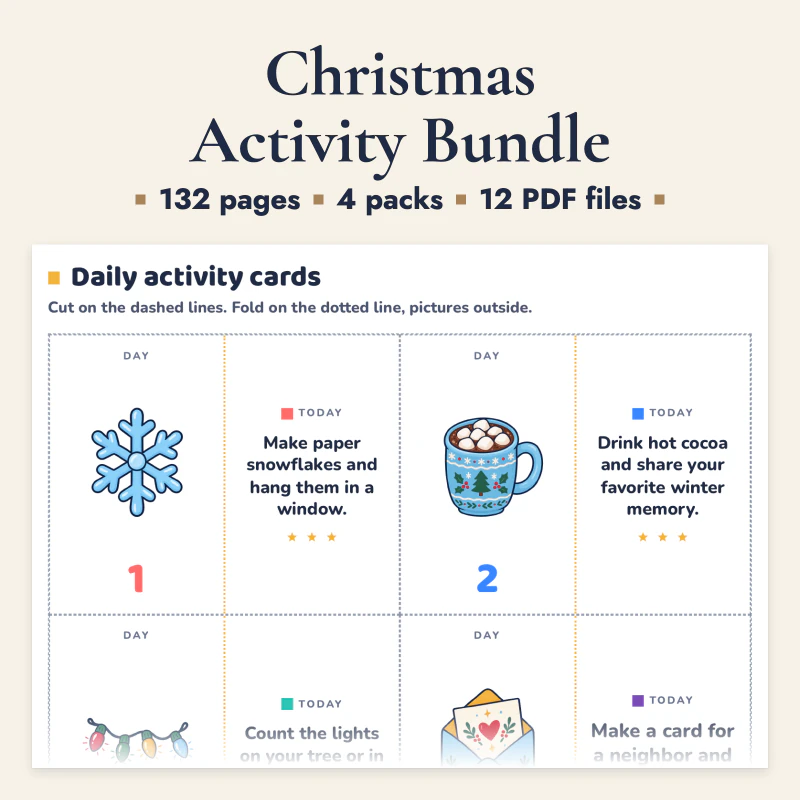
If you want the printing and the 24 activities done, our Advent Calendar for Kids includes a countdown poster, 24 fold-over activity cards and matching activity pages. It is a PDF in US Letter and A4, so you can print the set once and keep it for next year. For a bigger Christmas set, the Christmas Activity Bundle adds coloring pages, games and more activity sheets.